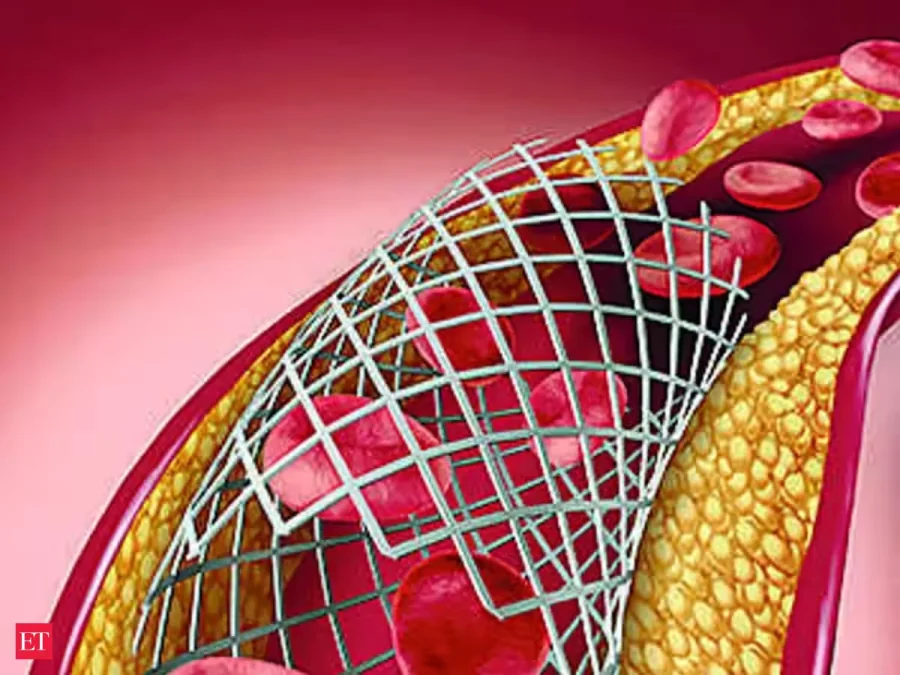
Three models of Indian-made heart stents are now the subject of a question that has travelled from a hospital ward to the Cabinet Secretariat in Delhi. A Rajya Sabha member who is also a practising doctor has asked the government to have the Health Ministry examine whether those stents are safe for the patients who receive them.
A Doctor-MP's Letter, and the Three Stents at Its Centre
Rajya Sabha member Ajeet Madhavrao Gopchade, a medical doctor by training, has submitted a representation to the Cabinet Secretariat. It flags safety concerns around three models of India-made, drug-eluting coronary stents — the kind inserted into narrowed arteries to keep blood flowing to the heart.
The representation links those concerns to a reported withdrawal of the same stent models in Sri Lanka following quality issues. That is the core of the complaint: if a regulator abroad pulled them, should India be asking questions at home?
Why a Withdrawal Abroad Sets Off Alarm Bells in India
Drug-eluting stents are not a niche product. They are implanted in one of the most common cardiac procedures performed in India, and they stay inside a patient's body permanently. A quality question about a stent is therefore not a manufacturing footnote — it is a question about what is sitting inside someone's artery.
That is precisely why the request has been framed as a matter for the Health Ministry rather than a routine complaint. A regulatory review, if it happens, would touch device makers, hospitals, cardiologists and every patient carrying one of the models named.
How the Sri Lanka Withdrawal Became an Indian Question
According to the representation, the three stent models were withdrawn in Sri Lanka after quality issues were flagged there. What remains unclear is the exact sequence: which authority ordered the withdrawal, on what technical grounds, and whether the action was a safety recall, a licensing lapse, or a supply and compliance issue.
Representations sent to the Cabinet Secretariat are typically forwarded to the ministry concerned for examination. That routing is administrative — it does not by itself mean a safety probe has begun.
What This Means for Patients Living With a Stent
For someone who received a stent last month, or five years ago, headlines of this kind land differently. There is no easy way to inspect an implanted device, and no way to know from the outside whether the model in your chest is one of the three mentioned.
The clinically sound position, as cardiologists routinely advise in such situations, is unchanged: do not stop or alter blood-thinning medication on your own, and do not treat an unverified report as a diagnosis. Any real concern should go to the doctor who performed the procedure.
Who Has to Respond, and Why the Chain Matters
Medical devices in India are regulated by the Central Drugs Standard Control Organisation under the Health Ministry. A representation of this nature would ordinarily require the ministry to either seek technical inputs from the regulator or record why no action is warranted.
As of now, no statement, advisory, recall notice or clarification from the Health Ministry, the Cabinet Secretariat or the device regulator has been reported publicly in connection with this representation.
The Counter-Argument: 'Withdrawn Elsewhere' Is Not Proof of Harm
There is a legitimate opposing view, and it deserves stating plainly. A product can be withdrawn in one country for reasons that have nothing to do with patient safety — contractual disputes, documentation gaps, a failed local registration process, or commercial decisions.
Regulatory standards also differ between countries, and a single authority's action is not automatically evidence of a defect. Without the technical basis of the Sri Lankan decision, the Indian concern remains a question that needs verification, not a conclusion.
What Is Confirmed, and What Still Isn't
Confirmed: A Rajya Sabha member who is a doctor has submitted a representation to the Cabinet Secretariat about three India-made drug-eluting stent models, citing a reported Sri Lankan withdrawal over quality issues.
Not established: The names of the manufacturers, the specific defects alleged, the dates of the withdrawal, the identity of the foreign authority involved, and whether Indian regulators have received any related data. Anything beyond this paragraph is speculation and should be read as such.
India's Made-in-India Medical Device Push Meets a Trust Test
This story sits inside a larger shift. India has spent years expanding domestic manufacturing of medical devices, and drug-eluting stents have been under government price control since 2017 — a move that reshaped the market and pushed local production up.
Cheaper, locally made stents widened access to cardiac care. But access and assurance are two different tests, and public confidence in Indian-made devices moves faster on anecdote than on data. How this representation is handled will quietly shape that confidence either way.
If You Have a Stent, Here's the Sensible Next Step
Identify your stent model from your discharge summary or implant card — hospitals are required to provide it. If it matches a model named in any official advisory, that is the moment to contact your cardiologist, not before.
Watch for official communication from the Health Ministry or CDSCO, which would carry the technical detail that news reports may not. Meanwhile, routine follow-up and prescribed medication remain the priority.
What Happens Next: Three Possible Paths
One possibility is that the ministry forwards the matter to the drug regulator for a technical assessment, which could lead to a safety alert, a batch investigation or a clean chit. A second is a formal clarification that no adverse data exists. A third is silence — which, in device regulation, is its own kind of answer.
None of these outcomes can be predicted from the representation alone. What is clear is that the request has been made on the record by a parliamentarian with a medical degree.
Our Take
The value of this representation lies less in its allegations than in the mechanism it triggers. India implants a very large number of coronary stents every year, and public trust in them depends on regulators being seen to check, not on regulators being seen to defend.
Equally, a withdrawal in another country is a prompt for inquiry, not a verdict. The responsible outcome here is a transparent, technical answer — one that names what was examined, what was found, and what patients should do. Anything short of that leaves patients and doctors filling the gap with rumours, which is the worst possible outcome for cardiac care.
Frequently Asked Questions
What is the coronary stent safety concern about?
A Rajya Sabha member and doctor has asked the Cabinet Secretariat to have the Health Ministry examine safety concerns involving three models of India-made drug-eluting coronary stents, reportedly withdrawn in Sri Lanka over quality issues.
Have Indian stents been recalled?
No. No recall, safety advisory or regulatory action has been announced in India in connection with this representation. The matter has only been raised, not adjudicated.
Are India-made drug-eluting stents safe?
India-made stents are approved by the national drug regulator and are widely used. This representation raises specific, unverified concerns about three models; it does not amount to a finding against Indian-made stents as a category.
What should a patient with a stent do right now?
Do not stop prescribed medicines or panic. Check your implant card or discharge summary for the stent model, and speak to your cardiologist if an official advisory names it.