President Droupadi Murmu used the golden jubilee stage of India's dedicated malaria research institute to deliver a warning rather than a victory speech: the disease is not beaten, and two modern forces could push the country backwards.
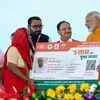
Speaking while inaugurating the year-long Golden Jubilee celebrations of the ICMR-National Institute of Malaria Research (ICMR-NIMR), she said malaria has long been a serious public health challenge in several countries, India included — and flagged climate change and insecticide resistance as threats to malaria eradication.
At NIMR's Golden Jubilee, a Warning Instead of a Victory Lap
The setting was deliberate. ICMR-NIMR is the country's specialist reference institution for malaria — the place where vector biology, drug efficacy, diagnostics and surveillance are studied and where national strategy draws much of its evidence.
Fifty years is a long time in disease control. India has recorded a sharp fall in malaria cases and deaths over the past two decades, a decline health officials link to insecticide-treated nets, rapid diagnostic tests and artemisinin-based combination therapy.
Which is precisely why the President's framing matters. A milestone anniversary is usually a moment to claim success. Instead, the message was that the conditions which made that success possible are changing.
Why a Warmer India Is a Sicker India
Malaria transmission is weather-dependent in a way few diseases are. The Anopheles mosquito needs standing water to breed and warmth to complete its life cycle quickly enough for the parasite to spread.
As temperatures rise and rainfall turns more erratic, the geography of that risk shifts. Highland areas that were once too cool for sustained transmission become viable. Monsoon patterns that once gave health systems a predictable season now deliver longer or unexpected transmission windows.
Public health researchers have repeatedly warned that extreme weather events — floods followed by stagnant water, or drought that forces people to store water at home — create exactly the conditions mosquitoes exploit.
The Mosquito That Learned to Survive
Insecticide resistance is the quieter problem, and possibly the more immediate one. Decades of heavy reliance on a small number of chemical classes, particularly pyrethroids used on bed nets and in indoor residual spraying, have selected for mosquitoes that survive contact with doses that once killed them.
Researchers have documented resistance in Anopheles populations in parts of India and more extensively across sub-Saharan Africa. When the net stops killing, it still blocks bites — but the protective margin narrows.
The consequence is uncomfortable: countries may have to rotate chemicals, invest in new formulations or combine tools, all of which costs money and requires continuous monitoring that strained health systems often lack.
Fifty Years On, the Fight Is Unfinished
The institute's own history tracks this shift. Its work has moved from a period when malaria was expected to be eliminated through spraying alone, through the era of drug resistance and resurgence, to today's more complex landscape of climate adaptation and integrated vector management.
That history is a caution against assuming progress is permanent. Malaria has rebounded before, in India and elsewhere, when vigilance slipped or funding fell.
What Is Confirmed — and What Still Needs Answers
Confirmed: The President inaugurated the year-long Golden Jubilee of ICMR-NIMR and described malaria as a long-standing public health challenge in several countries, including India. She linked climate change and insecticide resistance to risks for malaria eradication.
Not confirmed: No specific new funding, national elimination deadline, policy directive or research programme was reported from the event. Any figures or targets circulating without an official source should be treated as unverified.
Reasonable inference, not official statement: That the remarks signal a policy emphasis on climate-health adaptation and insecticide stewardship. That is analysis, not an announced decision.
The Risk Hidden Inside the Good News
India's malaria burden has fallen far enough that the disease has slipped down the public attention list. That is a success, but it carries its own danger.
Declining case counts can translate into thinner surveillance, fewer trained field staff and reduced community awareness — the exact gaps that allow resurgences to go unnoticed until they are large.
For families in high-burden districts of Odisha, Chhattisgarh, Jharkhand, Madhya Pradesh and the Northeast, this is not an abstraction. It determines whether a fever is tested quickly and treated free, or missed.
A Global Pattern, Not Just an Indian Problem
The President's warning mirrors a wider shift in global malaria thinking. The World Health Organization has flagged that progress against the disease has largely stalled since around 2015, with climate variability, insecticide resistance and drug resistance cited among the reasons.
That reframing matters for funding. Donors and governments respond to emergencies and clear targets; a slow, adaptive threat that erodes existing tools is harder to sell politically.
What This Means for People in Malaria-Prone Districts
For ordinary households, the practical advice has not changed, but the stakes have. Anyone with fever in a malaria-endemic area should seek testing rather than self-medicate, since delayed diagnosis is a leading cause of severe disease.
Sleeping under a treated net still works — even where resistance exists, it reduces bites. Eliminating stagnant water around the home, using screens and repellents, and following local health advisories during and after heavy rain remain sensible precautions, particularly for pregnant women and young children, who face the highest risk of severe illness.
Where the Fight Goes Next
Expect pressure to build in three areas: surveillance that detects outbreaks faster, newer insecticide classes and nets that combine chemical and non-chemical action, and vaccines used alongside existing tools rather than instead of them.
None of these is a silver bullet. The realistic goal is a portfolio of tools that keeps transmission low even as the climate and the mosquito change — a strategy that depends on sustained funding rather than periodic campaigns.
Our Take
The most significant thing about the President's remarks is the timing. Announcing a warning at an anniversary celebration, rather than a victory declaration, keeps the focus where the evidence points: the tools India has used to cut malaria are under biological and climatic stress.
That is not a reason for alarm, but it is a reason against complacency. Eradication claims made without funding, surveillance capacity and resistance monitoring attached are slogans. The honest position — the one the ICMR-NIMR platform implies — is that the next phase will be harder than the last, and will need sustained scientific attention rather than a single decisive push.
Frequently Asked Questions
What did President Murmu say about malaria?
At the inauguration of ICMR-NIMR's year-long Golden Jubilee, she said malaria has long been a serious public health challenge in several countries, including India, and warned that climate change and insecticide resistance could threaten malaria eradication.
What is insecticide resistance in malaria control?
It is the ability of Anopheles mosquitoes to survive exposure to insecticides that would previously have killed them. It develops when the same chemical classes are used repeatedly, and it reduces the effectiveness of treated bed nets and indoor spraying.
How does climate change affect malaria?
Warmer temperatures and erratic rainfall can lengthen transmission seasons, extend the mosquito's range into previously cooler areas, and create breeding sites through floods or household water storage during droughts.
What is ICMR-NIMR?
The National Institute of Malaria Research is a dedicated malaria research institute under the Indian Council of Medical Research. It studies mosquito biology, drug and insecticide efficacy, diagnostics and surveillance, and supports national malaria control strategy.