The Supreme Court has asked the National Medical Commission to examine whether medical graduates should be required to undertake rural service after completing their MBBS course. The matter arises from a legal challenge to Karnataka's compulsory rural-service requirements.
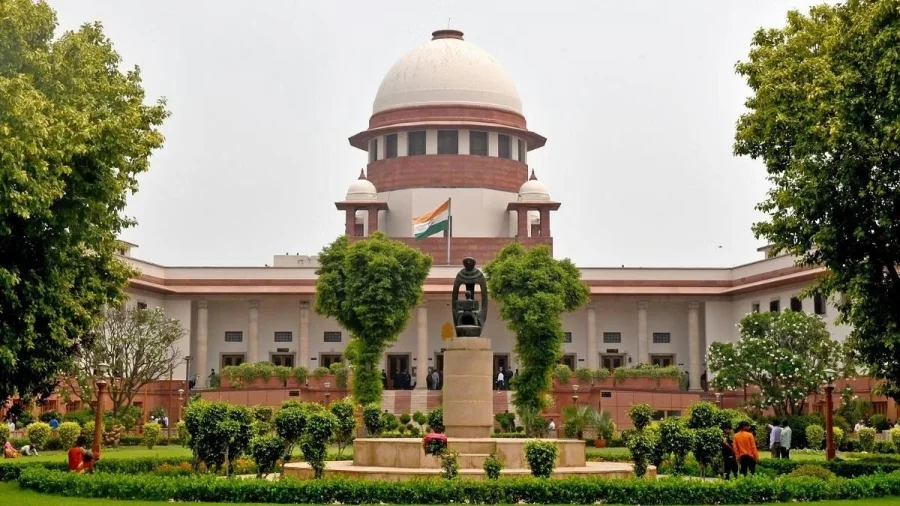
The Supreme Court of India has directed the National Medical Commission (NMC) to examine the issue of mandatory rural service for doctors after completion of their MBBS course.
A bench comprising Justice P. S. Narasimha and Justice Alok Aradhe issued the direction on Wednesday while hearing a petition concerning compulsory rural service requirements imposed on medical graduates.
The court has scheduled the next hearing for December 8, 2026.
The direction brings renewed attention to the debate surrounding the availability of doctors in rural and underserved areas, the obligations attached to medical education and the regulatory framework governing medical graduates across India.
Karnataka's Compulsory Rural Service Rules Under Challenge
The matter originates from a petition filed by medical students graduating from private seats at a deemed university in Karnataka.
The petitioners have approached the Supreme Court seeking directions to the Karnataka Commissionerate of Health and Family Welfare Services to issue their required No Objection Certificates (NOCs) without insisting on affidavits undertaking compulsory rural service.
The dispute concerns the Karnataka Compulsory Service Training by Candidates Completed Medical Courses Act, 2012, and the corresponding Rules of 2015.
Under the framework, eligible MBBS graduates, postgraduate medical degree and diploma holders, and super-speciality candidates are required to complete one year of compulsory public rural service before obtaining permanent registration with the Karnataka Medical Council.
The petitioners have challenged the extension of these requirements to candidates admitted through private seats in private and deemed universities under a notification issued on July 28, 2023.
Supreme Court Seeks Regulatory Examination
By directing the NMC to examine the issue, the Supreme Court has brought the medical education regulator into the consideration of compulsory rural-service requirements.
The matter involves broader questions concerning the availability of medical professionals in rural regions, the responsibilities associated with medical education and the consistency of service requirements across different states.
Earlier hearings also raised questions about the need for a national policy framework for compulsory rural service.
The Centre had indicated that state-level requirements differ, with several states imposing service bonds on medical graduates. The government had also referred to the possibility of stakeholder consultations to examine a more uniform approach.
Rural Healthcare Access and Doctor Availability
India continues to face challenges in ensuring equitable access to qualified medical professionals, particularly in rural and geographically underserved regions.
Public healthcare facilities in many areas depend on adequate availability of doctors across primary health centres, community health centres and district hospitals.
Mandatory rural-service arrangements have been used by various states as one mechanism to strengthen public healthcare delivery.
However, such requirements also raise questions about implementation, fairness, the distinction between government and privately funded medical seats, and the professional obligations of medical graduates.
A consistent regulatory approach could have implications for medical colleges, students, state health departments and healthcare workforce planning.
What Happens Next?
The NMC will now examine the issue in accordance with the Supreme Court's direction. The matter is scheduled to return before the court on December 8, 2026.
The proceedings will be relevant to the future discussion around compulsory rural service, state-level medical education policies and the availability of doctors in underserved communities.
For now, the Supreme Court's direction should not be interpreted as the introduction of a new nationwide compulsory rural-service requirement. The regulatory and legal questions remain under consideration.
The outcome could influence how India approaches the balance between medical graduates' professional rights, medical education policies and the need to strengthen rural healthcare services.