
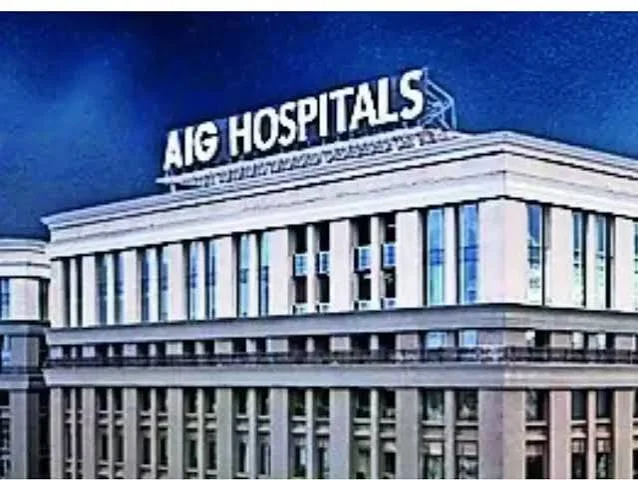
A negotiation under way in Hyderabad could end up pricing a single-city hospital group at ₹24,000 crore — and hand three global investors a slice of one of India's best-known names in digestive care. The talks are reported, not signed, and nobody involved has confirmed them on the record.
The Reported Deal: ₹2,000–2,500 Crore for 10–12%
According to the reported terms, Novo Holdings, GIC and Axight are in discussions to put in ₹2,000–2,500 crore into AIG Hospitals. In parallel, founders Duvvur Nageshwar Reddy and Penmetsa Venkata Subbaraju are looking to pare 10–12% of their holding at a valuation of about ₹24,000 crore.
The two numbers broadly track each other — 10–12% of ₹24,000 crore works out to ₹2,400–2,880 crore, close to the reported cheque size. What the report does not spell out is how much of the money is fresh capital for the hospital and how much simply buys out founder shares.
Who Is at the Table, and What Each One Brings
Novo Holdings is the Denmark-based investment company best known as the controlling shareholder of Novo Nordisk, and it has been steadily building a healthcare and life-sciences portfolio. GIC is Singapore's sovereign wealth fund, a long-horizon investor with healthcare exposure across Asia. Axight is named in the report as the third participant; no further detail on its role has been disclosed.
For a hospital group, that mix matters. Sovereign and strategic investors generally bring patient capital and international networks rather than quick exits — useful when a chain wants to build new hospitals rather than simply add beds.
Why Founders Might Sell a Slice Right Now
Founders rarely part with 10–12% without a reason, and the usual ones are well documented elsewhere in Indian healthcare: bringing in growth capital without loading the balance sheet with debt, giving a long-term investor a seat ahead of a larger build-out, or monetising part of a stake built over decades. None of these motivations has been confirmed in this case.
What is known is that the sale is being described as a stake reduction by the promoters, which points to a secondary transaction rather than a pure fundraise. The final structure may still change.
Why Private Equity Keeps Buying Indian Hospitals
Hospital chains have become one of the most contested asset classes in Indian healthcare. Demand is structurally rising, a large share of revenue is collected at the point of service, and once a hospital establishes itself the business tends to be sticky — patients return to the doctor and the brand, not to the building.
That combination explains why global funds that once avoided single-city hospital groups now compete for them. Hyderabad in particular has turned into a hub of multi-speciality expansion, with corporate chains and independent groups all adding capacity at the same time.
What AIG Reportedly Wants to Build Next
The stated plan is expansion. According to the original report, AIG has a new facility planned in Visakhapatnam and intends to grow significantly. In that reading, proceeds from a stake sale would fund capacity rather than repay debt — though the company has not said how any money raised would be used.
The Moat: Why a Speciality Group Can Command a Premium
AIG's draw is its narrow focus. The group's reputation rests on gastroenterology, hepatology and related digestive care — a niche where clinical outcomes and senior specialists are the product. That is slow and expensive to replicate: a reputation in endoscopy or liver transplantation cannot be bought the way a building can.
Brand pull in a speciality also drives referrals. Patients travel for a known name, and that supports occupancy, pricing power and margins — precisely the qualities investors pay a premium for. The flip side is concentration: a single speciality, anchored by a small group of senior doctors, is a strength and a dependency at once.
Confirmed, Reported and Still Unclear
Confirmed so far: nothing. No official statement has come from AIG Hospitals, Novo Holdings, GIC or Axight, and no term sheet or regulatory filing has been made public.
Reported: the participation of the three investors, the ₹2,000–2,500 crore figure, the 10–12% promoter stake sale, the ₹24,000 crore valuation and the Visakhapatnam expansion plan.
Unclear: the split between primary and secondary money, the final valuation, any board or governance rights attached to the investment, and whether the discussions will conclude at all. Reported terms in private transactions change

