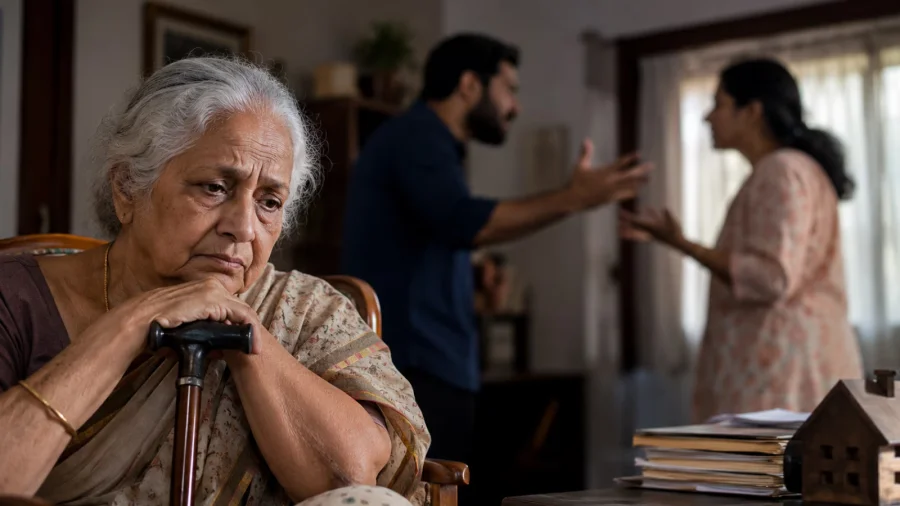
In Kerala, the phone call that children abroad dread most is the one that does not come. For a state that has sent its young people across the world for work, caring for the parents left behind has quietly become its most pressing social question — and now, an official one.
The Kerala Legislative Assembly has seen the introduction of "The Keralam Senior Citizens' (Care and Protection of Rights) Bill, 2026". The stated objective is straightforward: greater safety for the elderly, and protection of their rights. What it means in practice will depend entirely on what the Bill eventually says — and how it is enforced.
A Bill Born in the State That Is Ageing Fastest
Kerala has long been treated as a demographic preview of the rest of India. Census after census, it has recorded the country's highest share of elderly citizens, a consequence of decades of low birth rates, high life expectancy and large-scale migration of working-age adults.
That combination produces a specific kind of vulnerability. Many older Keralites live alone or in two-person households, with children in the Gulf, in other Indian cities or abroad. Property disputes, loneliness, neglect and, in the worst cases, abuse often surface too late.
Safety, Care and 'Rights' — What the Bill's Title Signals
The wording of the title is not accidental. "Care" suggests welfare measures — shelter, health support, perhaps oversight of old-age homes. "Safety" points towards protection from abuse, abandonment and exploitation. "Rights" is the strongest word in the title, implying entitlements that can be claimed rather than favours that can be granted.
Whether the Bill actually converts those words into enforceable entitlements — with defined duties, timelines and penalties — is the question the Assembly debate will answer. On the available record, those details have not yet been fully laid out.
Where This Sits in India's Existing Elder Care Framework
India already has a national law on the subject: the Maintenance and Welfare of Parents and Senior Citizens Act, 2007. It allows parents to claim maintenance from children, provides for tribunals and for state welfare measures.
That law leaves much of the machinery — tribunals, rules, welfare schemes and enforcement — to individual states. In practice, the protection an elderly person receives depends heavily on which state they live in. A dedicated Kerala law would seek to build that state-level architecture more deliberately.
For the Mother Living Alone, the Gap Between a Law and a Lifeline
Legislation is written in clauses, but it is experienced at kitchen tables. For a widow in Thrissur whose son works in Sharjah, a senior citizens' law matters only if it reaches her through a functioning helpline, a responsive local body, a neighbour who knows whom to call.
That is where elder care laws most often stall. Awareness is thin, reporting is culturally difficult — many families treat neglect as a private shame rather than a public wrong — and local bodies frequently lack dedicated staff for welfare follow-up.
Confirmed, Unclear and Still to Come
Confirmed: the Bill has been introduced in the Kerala Legislative Assembly, its full name, and its stated aim of ensuring safety, care and protection of rights for senior citizens.
Unclear at this stage: the specific provisions — whether it mandates registration and inspection of old-age homes, sets penalties for abandonment or abuse, creates tribunals or helplines, funds any scheme, or defines eligibility by age.
Not yet decided: whether the Bill will be sent to a subject committee, amended during debate, or passed in its current form. Introduction is the beginning of the process, not the end of it.
The Cautious View: A Law Cannot Fill an Empty House
Not everyone believes a new statute is the missing piece. Critics of elder-care legislation generally point to three problems: enforcement capacity, funding, and the risk that a law creates paperwork instead of caregivers.
There is also a subtler concern. Where a law penalises neglect, it can harden family disputes — sometimes to the disadvantage of the very parent it was meant to protect, especially in property-linked conflicts.
Supporters counter that the alternative to imperfect law is no protection at all, delivered unevenly and at the discretion of officials. Both arguments are legitimate, and the Bill's final shape will decide which one carries the day.
A Wider Pattern: States Writing Their Own Rules for Growing Old
Kerala's move fits a broader shift. As India's elderly population grows over the coming decades, states are increasingly expected to design services — day-care centres, home-based care, pension reach, elder-friendly transport — that the national framework does not by itself deliver.
The language of "rights" also reflects a global shift in thinking, visible in the World Health Organization's Decade of Healthy Ageing (2021–2030), which frames ageing as a matter of participation and dignity rather than only dependency and cost.
What Families, Seniors and Caregivers Should Watch For
Until the Bill becomes law, the protections that already exist remain the practical recourse: maintenance claims under the central 2007 Act through the district-level machinery, complaints to local police and revenue officials, and the national Elder Line helpline on 14567 for guidance in distress.
For the Bill itself, the details worth tracking are unglamorous — who is defined as a senior citizen, who is responsible for enforcement, whether local bodies get dedicated funds, and whether there is any independent grievance mechanism. Those four clauses will determine whether this is a landmark or a letterhead.
What Happens Next in the Assembly
The Bill must now move through the standard legislative path: debate, amendment, passage, and then gubernatorial assent. Only after that would rules be framed — typically the slowest and most consequential stage of any welfare law.
It is also likely to draw attention beyond Kerala's borders. If a state with India's oldest population builds a workable model, other states facing the same demographic curve will study it closely.
Our Take
Kerala is often described as India's future arriving early — in fertility, in migration, in the shape of its households. On elder care, that future is already here. Millions of older Indians will live in households that look like Kerala's do today.
That is why the significance of this Bill exceeds its immediate text. It is an admission that elder care is a public responsibility, not only a private virtue — and that the state intends to define what families and institutions owe their oldest members. Whether the promise survives contact with the Assembly, funding and bureaucracy is the part that will actually matter.
Frequently Asked Questions
What is the Keralam Senior Citizens' (Care and Protection of Rights) Bill, 2026?
It is a Bill introduced in the Kerala Legislative Assembly aimed at improving safety and care for senior citizens and protecting their rights. It has been introduced but is not yet law.
Has the Bill been passed?
No. It has only been introduced. The Bill must pass through debate, amendment and eventual passage in the Assembly, followed by assent, before it becomes enforceable law.
How is this different from the existing law for senior citizens in India?
India already has the Maintenance and Welfare of Parents and Senior Citizens Act, 2007. The Kerala Bill would operate as a state-level framework, potentially consolidating care, protection and rights provisions specific to Kerala's ageing profile.
Will senior citizens get financial support under this Bill?
That is not established in the available information. The Bill's declared focus is safety, care and protection of rights. Whether it includes monetary support or pension-linked measures will become clear only when its full provisions are debated.
Where can an elderly person in distress seek help today?
Existing routes include complaints under the central 2007 Act through the district-level machinery, local police and revenue authorities, and the national Elder Line helpline on 14567.