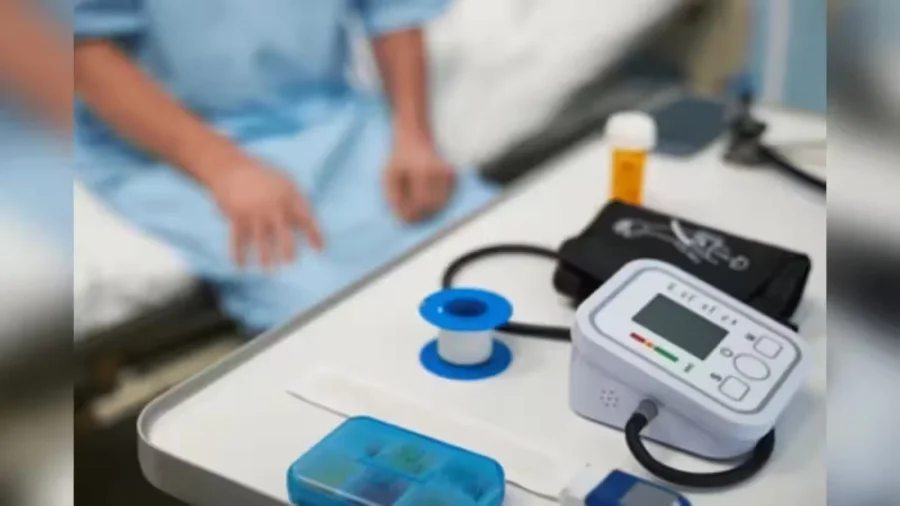
For most of the last decade, private equity money in Indian healthcare went where patients could see it: hospital chains, diagnostic labs, pharmacy networks. The next race, investors appear to be betting, will be fought over what patients never notice — the machines, implants and instruments a hospital simply cannot run without.
Medical devices are emerging as the new kid on the block in India's healthcare investment landscape. A fresh round of deals points to a potential wave of consolidation, and the reasons cited are straightforward: a fragmented market, rising demand, and the chance to make in India what is currently bought from abroad.
The Money Is Moving From Beds To Hardware
Healthcare investing in India has historically clustered around services — hospitals, diagnostics and pharma. That made sense. Services scale with population, generate predictable footfalls, and are relatively easy to underwrite.
Devices are a different animal. They are capital-intensive, regulated, engineering-heavy and slower to scale. That combination kept many generalist investors away. It is also precisely why specialists are now circling: the sector is under-owned, and that is where returns are usually found.
A Fragmented Market Is Exactly What Buyers Want
Fragmentation, which looks like a weakness to an operator, looks like an opportunity to an investor. Dozens of small and mid-sized Indian manufacturers compete in overlapping categories without a dominant national player.
For a private equity fund, that structure is a built-in playbook: acquire a strong regional or category leader, bolt on smaller players, professionalise quality systems and distribution, then sell a larger, more valuable platform.
How India Ended Up Importing Most Of Its Devices
A large share of the equipment used in Indian hospitals — from advanced imaging systems to specialised consumables — has long been sourced from overseas manufacturers. Import dependence has been a recurring theme in government policy discussions for years, and it is the gap the current investment thesis is built on.
Two policy threads matter here. The government's production-linked incentive scheme for medical devices, announced in 2020, was aimed at higher-end categories such as imaging and critical care equipment. The National Medical Devices Policy, cleared by the Union Cabinet in 2023, set out a roadmap to expand domestic manufacturing and reduce dependence on imports.
Devices themselves are regulated by the Central Drugs Standard Control Organisation under the Medical Devices Rules, 2017 — a framework that determines how quickly a new product can reach the market.
Who Actually Feels This — Patients, Doctors And Founders
For patients, the connection is indirect but real. Domestic manufacturing, if it scales, is expected to influence pricing and supply reliability over time, particularly for high-use consumables. It does not automatically mean cheaper treatment.
For doctors and hospital administrators, a stronger domestic supply base could mean shorter lead times for equipment and spare parts, and less exposure to global supply shocks.
For founders of small device companies, the more immediate effect is access to growth capital and, often, an exit route that did not exist a few years ago.
What The Policy And Regulatory Backdrop Already Provides
Institutional support for the sector is not new. Manufacturing incentives, a dedicated national policy and a defined regulatory pathway together give investors a framework they can underwrite against.
Private equity and venture funds operating in India also function within a regulated structure overseen by the Securities and Exchange Board of India, which governs pooled investment vehicles. That matters for how deals are structured and how exits are timed.
What the material reviewed for this report does not contain is any statement from a ministry, regulator or company specifically about the transactions driving this trend. Deal-level details were not disclosed.
Why A Device Business Is Harder Than It Looks
The bullish case is easy to state: rising healthcare spending, an ageing and more insured population, growing hospital infrastructure, and a large import bill that could be replaced with local production.
The bearish case is equally real. Device development cycles are long, clinical validation and regulatory approvals take time, and hospital procurement is a relationship-driven process where entrenched global brands hold strong positions. Scale does not arrive quickly.
That is the tension at the heart of this story. The opportunity is genuinely large. So is the execution risk.
What's Confirmed, And What's Still Speculation
Confirmed: medical devices have moved onto the radar of healthcare-focused private equity, and recent deal activity is being read as a sign of consolidation ahead.
Not confirmed: the identity of specific buyers and targets, deal values, valuations, timelines, and whether the trend translates into completed transactions. Those details were not available in the material reviewed and should not be assumed.
Anything beyond the direction of travel is, for now, expectation rather than fact.
The Playbook Investors Are Betting On
The appeal of a device platform rests on three things. First, recurring revenue: consumables, catheters, implants and reagents are used repeatedly, not bought once.
Second, switching costs. Once a device is embedded in a hospital's workflow and its clinicians are trained on it, replacing it is disruptive — a moat that builds with every installation.
Third, regulatory and quality barriers. Building a compliant manufacturing line and a certified product portfolio takes years, which limits how fast new competitors can appear.
Combine those with distribution reach across India's tier-2 and tier-3 hospitals, and you have the shape of the thesis: buy fragmented assets, add scale, and hold the position.
The Risks Nobody Should Ignore
Consolidation does not always create value. Overpaying for fragmented assets can destroy returns, particularly if growth assumptions are built on policy support rather than verified demand.
There is also a public-interest question. If investors push for margin expansion, procurement costs for hospitals could rise — and those costs eventually travel toward patients or insurers.
Quality and compliance remain the sector's hardest test. A single manufacturing or safety lapse can undo years of brand-building in a category where trust is everything.
And global competition has not gone anywhere. Imported devices still hold a strong position in high-end categories, and established multinationals are not standing still.
This Is Bigger Than One Sector Bet
The shift fits a wider pattern in Indian healthcare: capital moving from pure service delivery toward manufacturing, technology and the supply chain underneath it.
It also mirrors what has already happened in pharmaceuticals and diagnostics, where domestic scale eventually changed the cost and availability equation. Whether devices follow the same path is the open question.
What This Means If You're A Founder, Doctor Or Investor
Founders: a well-documented quality system, regulatory approvals and a defensible product niche will matter more than topline growth when investors evaluate you. Compliance is now a valuation driver, not a formality.
Doctors and hospital administrators: expect more consolidation among your suppliers. That can mean better service support, but it can also mean fewer negotiating options over time.
Investors and students tracking the sector: treat reported deal flow as a signal of interest, not proof of returns. Ask what a deal implies about margins, replacement cycles and exit timelines before drawing conclusions.
Where The Device Sector Could Go Next
If the current momentum holds, the likeliest near-term outcome is a wave of small and mid-sized acquisitions, followed by larger platform-level deals. Manufacturing capacity in higher-end categories is the area to watch most closely.
What would weaken the story is slower-than-expected regulatory clearances, weak hospital capex, or policy incentives that do not translate into actual production. None of those can be ruled out.
Our Take
The enthusiasm is understandable. India has a large, growing healthcare market and a device sector that has punched below its weight for years. Fragmentation plus import dependence is a classic private equity setup, and the policy environment is unusually supportive.
But this is a thesis, not a result. Device businesses reward patience and punish optimism, and the gap between announced intent and completed consolidation is often wide. The story worth following is not how much money enters the sector — it is what gets built with it.
Frequently Asked Questions
Why is private equity interested in India's medical devices sector?
Three reasons are cited: a fragmented market with room for consolidation, rising demand for devices as healthcare infrastructure expands, and the opportunity to replace imported products with domestically manufactured ones.
Which segments are attracting the most attention?
The reported focus is on high-use consumables and higher-end equipment categories where import dependence is greatest. Specific segments were not detailed in the material reviewed.
Will this make medical treatment cheaper for patients?
Not directly or immediately. Domestic manufacturing can influence pricing and supply reliability over time, but hospital procurement, insurance and other cost layers also determine what a patient pays.
Does this mean medical device stocks or startups are a safe bet?
No. Reported deal activity signals investor interest, not guaranteed returns. Device businesses carry long development cycles, regulatory risk and strong competition from established global manufacturers.